The Step-by-Step Method Nigerian Mothers Are Using to End the Daily Battles With Their Teenagers and Rebuild the Bond That Slammed Doors, Silent Treatments, and "Why Do You Even Care" Nearly Destroyed — Without Shouting, Without Punishment That Makes It Worse, and Without Losing Your Authority (Even If Nothing You've Tried Has Worked)
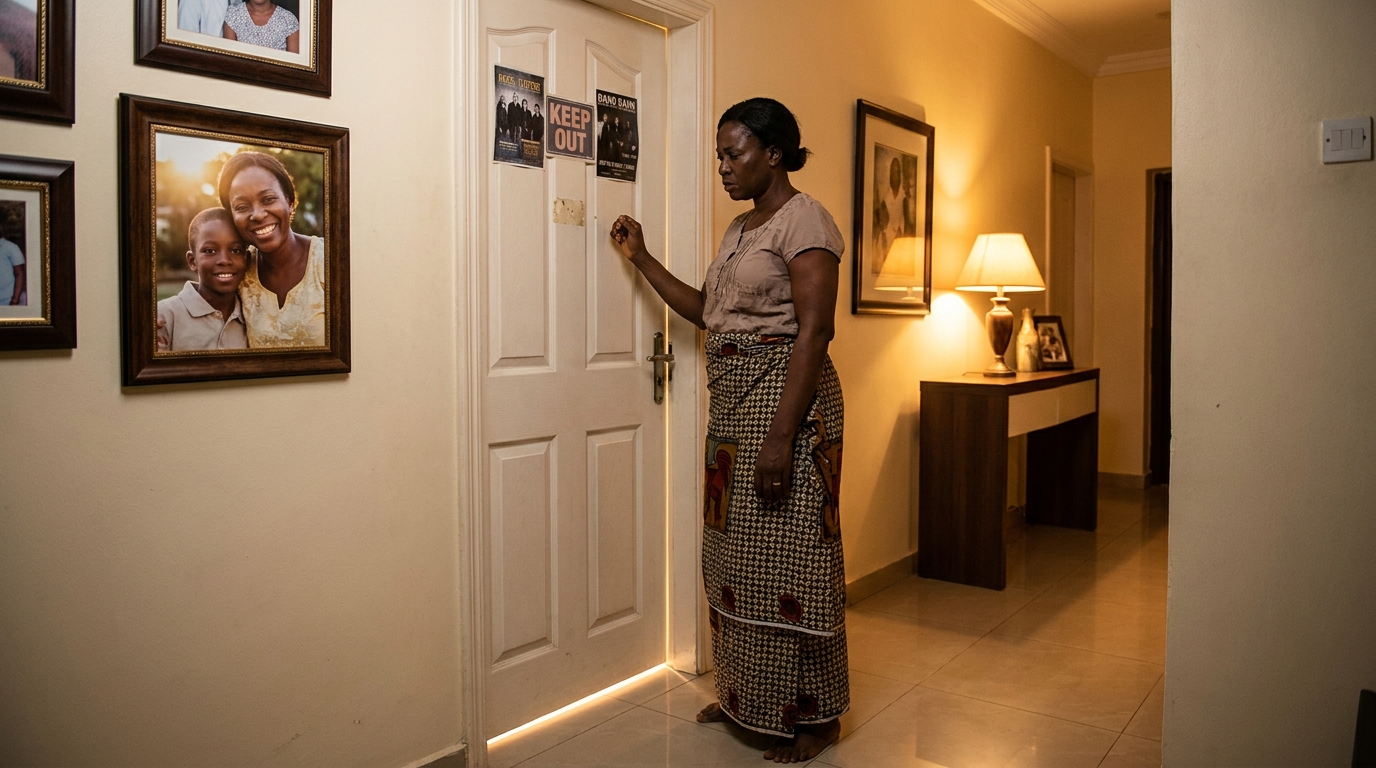
The sound that changed my relationship with my son was not a word. It was a sound.
The door.
His bedroom door. Slammed so hard the frame shakes. Slammed after every conversation. After every request. After every "Chidi, we need to talk." After every "how was school?" that receives a grunt instead of an answer. After every meal where he eats in silence and carries his plate to his room like the dining table is a sentence he's serving.
The door that used to be open. That used to stay open when he was 10 and wanted me to see what he was drawing. That he'd leave open at night so my voice from the kitchen could reach him. That he'd walk through 15 times a day to show me something, tell me something, ask me something.
Now the door slams. And the slam says everything his mouth won't: leave me alone. Stop trying. You don't understand. Why do you even care.
And every time it slams, something in me breaks a little more. Because I am standing on the other side of a door that used to be the bridge between us. And I don't know how to open it anymore without triggering another fight, another shout, another "WHY DO YOU EVEN CARE" that echoes through the house long after his voice stops.
If you brace yourself before knocking on your own child's door, if every conversation becomes a fight, if "why do you even care" has replaced "mummy, look at this," if you've tried grounding, shouting, phone confiscation, being his friend, laying down the law, and NONE of it worked, keep reading.
My name is Ngozi. I'm 46. I live in Lagos. I work in HR.

And for 2 years, the door was the loudest thing in my house. Until a 68-year-old retired school principal named Mama Ifeoma showed me why everything I'd tried had made it worse and what to do instead.
The Night He Said "I Wish I Didn't Live Here"
It was a Wednesday. Chidi had come home from school and gone straight to his room. Door closed. Not slammed. Closed. Which was somehow worse because the slam at least acknowledged I existed.
I knocked at 7pm. "Chidi, dinner is ready."
No answer.
I knocked again. "Chidi."
"I'M NOT HUNGRY."
"You need to eat. Come to the table."
The door opened. Not because he wanted to eat. Because he wanted to fight. I could see it in his face. The jaw set. The eyes hard. 15 years old and looking at me like I was the enemy in his own home.
"Why can't you just LEAVE ME ALONE? I said I'm not hungry. Why do you ALWAYS have to control everything? I can't even be in my own ROOM without you knocking and DEMANDING."
"I'm asking you to come to dinner, Chidi. Not climb a mountain."
"I WISH I DIDN'T LIVE HERE."
Seven words. Said by the boy I carried for 9 months. The boy whose first word was "mama." The boy who used to run to me at the school gate. The boy who is now standing in his doorway telling me he wishes he lived somewhere else. Somewhere I'm not.
I didn't shout. I didn't cry. I turned around and walked to my bedroom. Sat on the edge of the bed. And felt something worse than anger: the quiet certainty that I was losing my son and everything I was doing to hold on was pushing him further away.
That night, I decided: I need to understand what is happening to him. Not what he's DOING wrong. What is happening INSIDE him that is turning every word I say into a battle. Because this boy is not bad. He is changing. And I don't know how to change WITH him.
Two Years of Strategies That Made Everything Worse
The defiance started at 13. Gradually. Where there used to be compliance, there was questioning. Where there used to be respect, there was challenge. Where there used to be "yes, mummy," there was "why should I?"
Strategy 1: The Shout. When he first talked back, I shouted. The Nigerian mother's reflex. "Who do you think you're talking to?" It worked when he was 8. At 13, it escalated. He shouted back. LOUDER. And the fight became two people shouting instead of one person parenting. The volume increased. The respect decreased. The door slammed harder.
Strategy 2: The Punishment. I grounded him. Took the phone. Banned friends. Cancelled outings. Each punishment created a short period of sullen compliance followed by WORSE defiance. The punishment didn't change his behaviour. It changed his trust. He started hiding things. Lying about where he went. Clearing his phone before I checked it. The punishments taught him to be secretive, not obedient.
Strategy 3: The Friend. My sister said "try being his friend." So I stopped being the authority and tried being cool. Asked about his music. Used his slang. Tried to laugh at what he found funny. He saw through it in 2 days. "Mummy, you're trying too hard." The attempt to be his friend stripped me of both friendship AND authority. Now I was neither.
Strategy 4: The Law. My husband said "lay down the law." Rules. Consequences. Non-negotiable structure. Curfews. Phone hours. Chore schedules. It lasted 10 days. Chidi followed every rule with mechanical compliance and absolute emotional withdrawal. He did what was required. He said nothing that wasn't required. He looked through me like glass. The law was followed. The relationship was dead.
Every strategy failed. Not because Chidi was "the exception." Because every strategy addressed his BEHAVIOUR without understanding his DEVELOPMENT. I was treating a developmental transition like a discipline problem. And every discipline tool I used made the transition harder.
The Principal Who Raised 5 Teenagers Without Losing One
March 2026. A parents' meeting at Chidi's school. The new term had started with a call from his form teacher: "Mrs. Okafor, Chidi is disengaging in class. He's not disruptive. He's absent. Present in body, absent in participation."
At the meeting, I sat beside a woman I'd seen at every parents' event for years but never spoken to. Mama Ifeoma. 68 years old. A retired school principal who had run a secondary school for 25 years and raised 5 children of her own. All 5 had gone through adolescence. All 5 had come out the other side with their relationship with their mother intact.
After the meeting, in the kind of honest conversation exhausted mothers have in parking lots, I said: "Mama, my son fights me on everything. He slammed his door so hard last week the handle broke. He told me he wishes he didn't live here. I've tried everything. Nothing works. I think he's the exception."
She looked at me with 25 years of experience and 5 teenagers of her own and said:
"There are no exceptions. There are only parents who were never taught what adolescence actually IS. Your son is not defying you. He is separating from you. It's not the same thing. Defiance is a choice. Separation is a biological need. Every mammal on earth separates from its mother during adolescence. Your son's brain is literally rewiring itself to become independent. The arguments, the door-slamming, the 'leave me alone': these are not attacks on YOU. They are his developing brain practising independence on the safest person he knows. You."
"Every strategy you tried treated the separation as a PROBLEM to fix. It's not a problem. It's a PROCESS to navigate. Shouting escalates it. Punishment poisons it. Friendship undermines your authority. Rigid rules kill the connection. None of them work because none of them address what's actually happening: a child becoming an adult and needing his mother to change HOW she mothers, not WHETHER she mothers."
She taught me a method she had developed over 25 years of running a school and raising 5 adolescents:
Part 1: The Understanding Framework. What is actually happening in your teenager's brain. Why they fight. Why they withdraw. Why they say things that feel like hatred. The neuroscience of adolescence, explained in plain language. When you understand WHY the door slams, you stop taking it personally. And when you stop taking it personally, your response changes from reactive to strategic.
Part 2: The Communication Reset. How to replace the patterns that escalate (shouting, demanding, interrogating, lecturing) with patterns that connect (validating, inquiring, timing, listening). Specific daily practices. Exact phrases that de-escalate. Exact phrases that open. The difference between a conversation that ends with the door and a conversation that keeps it open.
Part 3: The 21-Day Reconnection Protocol. A structured, day-by-day system for rebuilding the bond. Not overnight. Not by pretending the fights didn't happen. By showing your teenager, through consistent daily actions, that you are SAFE. That disagreement doesn't mean rejection. That growing up doesn't mean growing apart. 21 days of small, strategic actions that rebuild trust one open door at a time.
"Follow it for 21 days," she said. "Don't expect him to change by Day 3. Expect YOURSELF to change by Day 3. Your response changes first. His response follows. The door opens after the trust rebuilds. And the trust rebuilds after he sees that you've stopped fighting his development and started supporting it."
Days 1-5: The Door Still Slammed
I started on a Monday. Understanding Framework read. Communication Reset practices started. New response patterns replacing old ones.
Day 2: Chidi came home. Grunted. Went to his room. Door closed.
Day 3: I knocked. "Chidi, dinner." He came. Ate in silence. Returned to his room. Door closed. Not slammed. Closed.
Day 5: I tried one of the Communication Reset phrases. Instead of "how was school?" (which always gets "fine"), I said: "What was the most boring part of your day?" He paused. Looked at me. "Chemistry. It was so boring I nearly fell asleep." The first real sentence in 3 days.
But that evening, a fight about screen time. The old pattern. The old volume. The door. SLAMMED.
Day 5: I sat outside his door and thought: "The old woman has given me phrases and a framework. My son still slammed his door tonight. How is understanding his brain going to change his behaviour?"
Then Mama Ifeoma's voice: "You changed for 5 days. He has experienced 2 years of the old pattern. His defences are set. They will not disarm in 5 days. By Day 10, he will notice something is different. By Day 14, he will test whether it's real. By Day 21, if the new pattern holds, the door will open. Not because you forced it. Because he chose to."
I continued.
Day 10: He Left His Door Open
A Thursday evening. Chidi came home from school. Went to his room. But this time, the door stayed open. Not wide open. Ajar. 3 inches. But in the language of a teenager, 3 inches of open door is an invitation that a swinging-wide door at age 10 never was. He was allowing my presence without inviting it. Testing whether I'd rush in or respect the gap.
I walked past. Didn't stop. Didn't knock. Didn't ask about homework. Said: "There's chin chin in the kitchen if you want some." Kept walking.
10 minutes later, he was in the kitchen. Eating chin chin. Standing. Not sitting. Not committing to a full conversation. But PRESENT. In the kitchen. Where I was. With the chin chin. And the door upstairs: still open.
Day 17: He Sat Down
The chin chin kitchen visits became a pattern. Short. Wordless sometimes. But consistent. He was orbiting. The way teenagers do when they want to reconnect but won't admit it. They don't come to you. They come to the ROOM you're in and pretend they came for something else.
Day 17. I was cooking. He came to the kitchen. Sat down. Not standing. SAT DOWN. Pulled out his phone. Showed me a video. "Mummy, look at this." The first "mummy, look at this" in 14 months.
I didn't overreact. I didn't cry. I watched the video. Laughed. Said "show me another one." He did. We sat in the kitchen for 20 minutes watching videos on his phone. No homework discussion. No lectures. No rules. Just a mother and her son sharing a screen in a kitchen where, 2 weeks ago, they couldn't share a meal without a fight.
Day 21: He Knocked on MY Door
A Sunday evening. I was in my bedroom reading. A knock on my door. Not his door. MINE.
"Mummy?"
"Come in."
He came in. Sat on the edge of my bed. The same bed I'd sat on the night he said "I wish I didn't live here." He looked at his hands for a long time. Then:
"I know I've been... difficult. I don't know why I get so angry. Sometimes I hear myself shouting and I don't even know why I'm shouting. I don't hate you. I don't hate it here. I just..." He paused. "I don't know. Everything feels like too much sometimes."
I didn't lecture. I didn't say "I told you so." I said: "I know. Growing up is hard. And I haven't always made it easier. I'm learning too."
He leaned his head against my shoulder. 15 years old. 5 foot 9. Leaned against me the way he used to at 8.
The door was open. Not just his bedroom door. The door between us. The one that had been slammed shut for 2 years. Open. Not because I forced it. Because the method taught me to stop fighting his development and start supporting it. And when I stopped fighting, he stopped slamming.
What Changed Beyond the Door
The fights. They haven't disappeared. He's still 15. But they've changed. Where there used to be shouting, there's now disagreement. Disagreement is healthy. It means he's forming opinions. The difference is that disagreements no longer end with the door. They end with "I disagree but I hear you." From both of us.
The mornings. He comes to breakfast. Sits down. Sometimes talks. Sometimes doesn't. But he's THERE. At the table. In the family. Present. The mornings used to begin with a battle. Now they begin with toast and silence that isn't hostile. Just quiet.
The phone. I stopped confiscating it. Instead, the Communication Reset taught me how to discuss screen time as a NEGOTIATION, not a commandment. He agreed to limits he helped SET. And because he set them, he follows them. Not perfectly. But willingly. The phone is no longer a war.
The guilt. I no longer feel guilty for not liking who he was being. The Understanding Framework showed me: I was responding to a DEVELOPMENTAL PHASE, not a permanent character. He wasn't becoming a bad person. He was becoming an independent person. And the becoming is messy, loud, and door-slamming. It's supposed to be.
I Wasn't the Only One
My colleague at work. 44. Daughter, 14. "The Communication Reset changed everything. I was asking 'how was school' every day and getting 'fine' every day. The method taught me to ask differently. 'What annoyed you most today?' She talked for 20 minutes. The question unlocked the door."
My sister. 50. Son, 17. "I was about to send him to boarding school. The punishment had escalated to exile. The Understanding Framework showed me: his brain is DESIGNED to push away. When I stopped pushing back, he stopped pushing harder. By Day 14, he sat with me after dinner. First time in a year."
Same method. Same framework. Different children. Different ages. Same result: when the parent changes their approach, the teenager changes their response. The door opens because the person knocking learned to knock differently.
Why I'm Sharing This
After our reconnection, I asked Mama Ifeoma's permission to document her method. "Mama, there are mothers bracing themselves before knocking on their own child's door. Mothers whose children say 'why do you even care.' Mothers who manage teams at work but cannot manage the person they love most. Can I write this down?"
She agreed. "Tell them: your child is not the exception. Your child is developing. And you were never taught how to parent development. You were taught how to parent obedience. Obedience works at 8. At 15, it creates war. This method teaches you how to parent the transition. And when the transition is supported, the door opens."
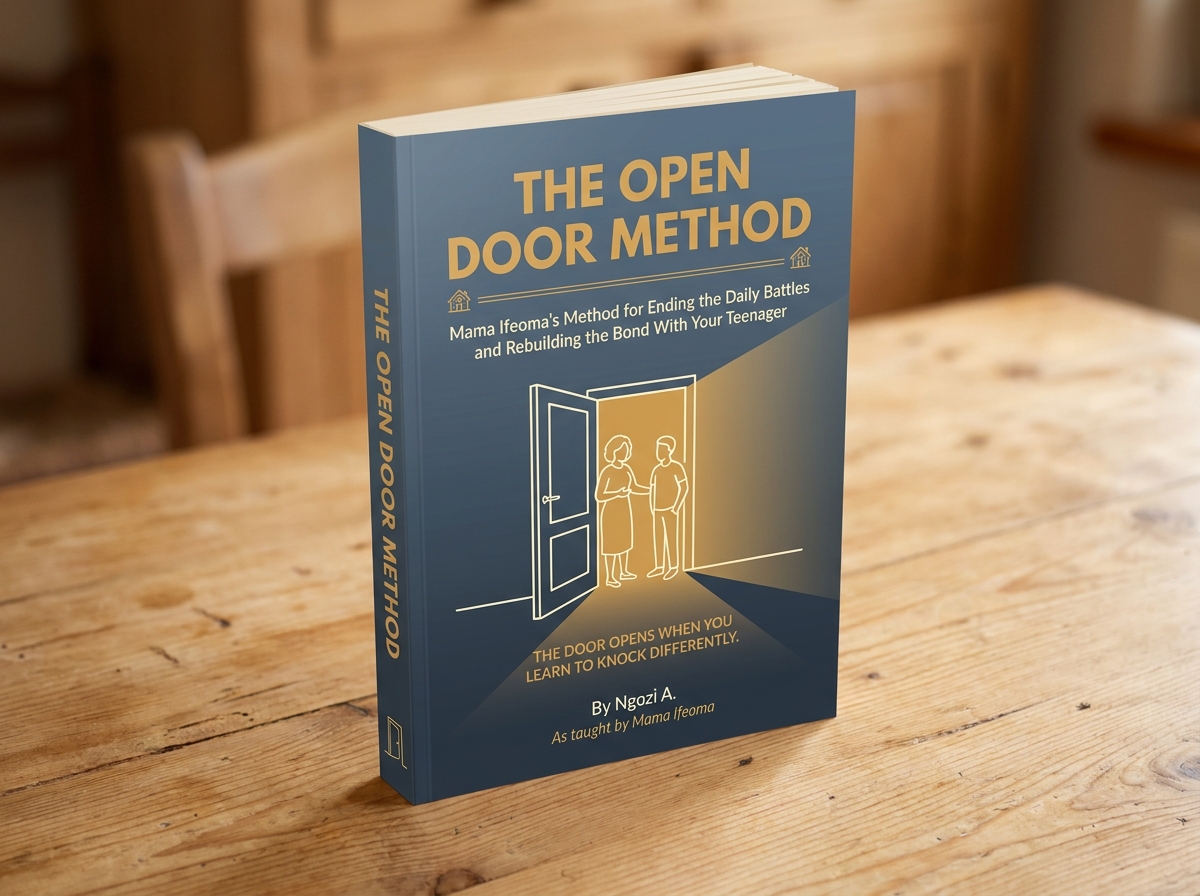
The Open Door Method
Mama Ifeoma's Method for Ending the Daily Battles and Rebuilding the Bond With Your Teenager
The door opens when you learn to knock differently.
What Other Mothers Are Saying
Main Method: ₦25,000 value
Bonus #1 (De-Escalation Playbook): ₦8,000
Bonus #2 (Reconnection Conversations): ₦8,000
Total Value
₦41,000
You Pay Today
₦9,750
One payment. Lifetime access. Works with any teenager. Any age. Any level of defiance.
Instant download • Both bonus guides included • 21-day guarantee • Works even if nothing else has
Plus: 2 Essential Guides
🚪 BONUS #1: The De-Escalation Playbook
(₦8,000 Value. Yours FREE)
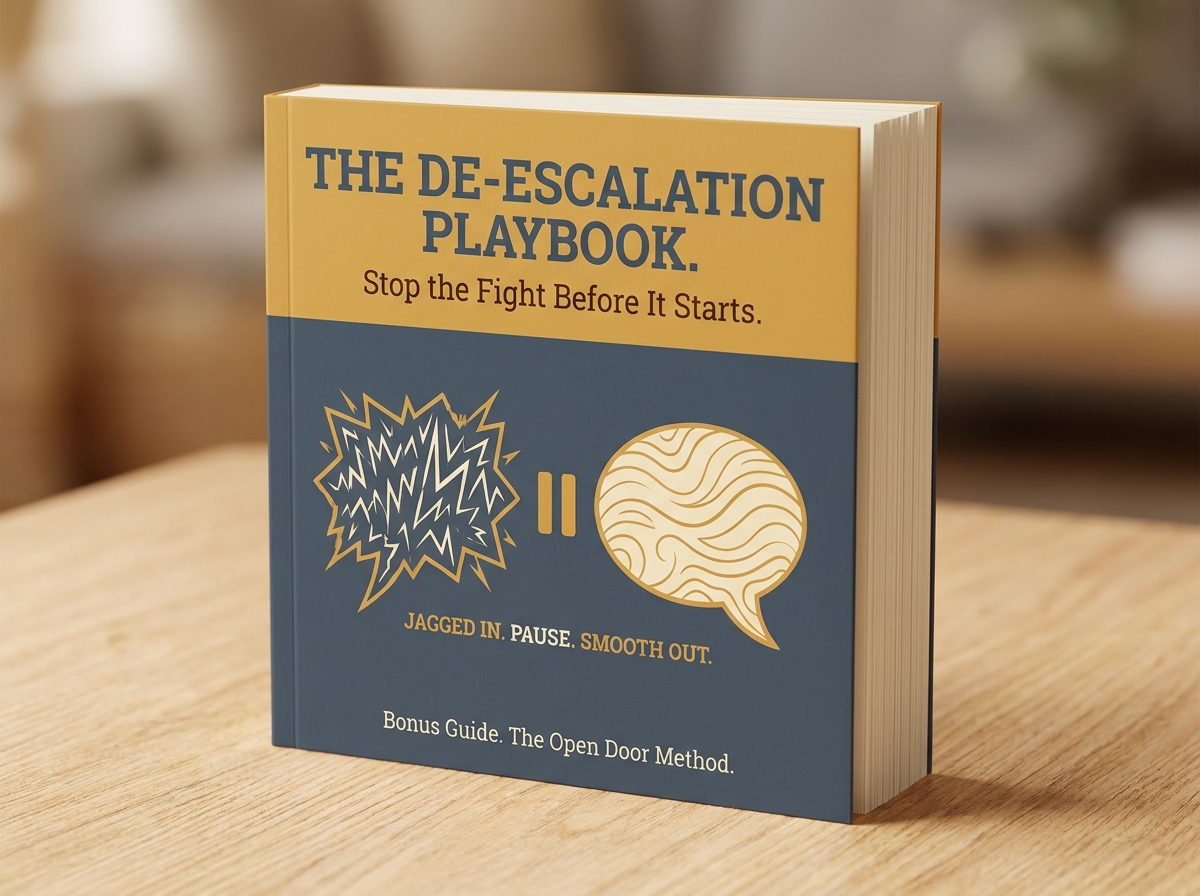
How to stop a fight before it starts. The 5-second pause that breaks the shouting cycle. The tone drop technique. The strategic withdrawal that ends the battle without surrendering authority. 10 real scenarios with exact scripts: homework battles, phone wars, curfew negotiations, disrespectful language. Print it. Keep it on your fridge.
🚪 BONUS #2: The Reconnection Conversation Guide
(₦8,000 Value. Yours FREE)
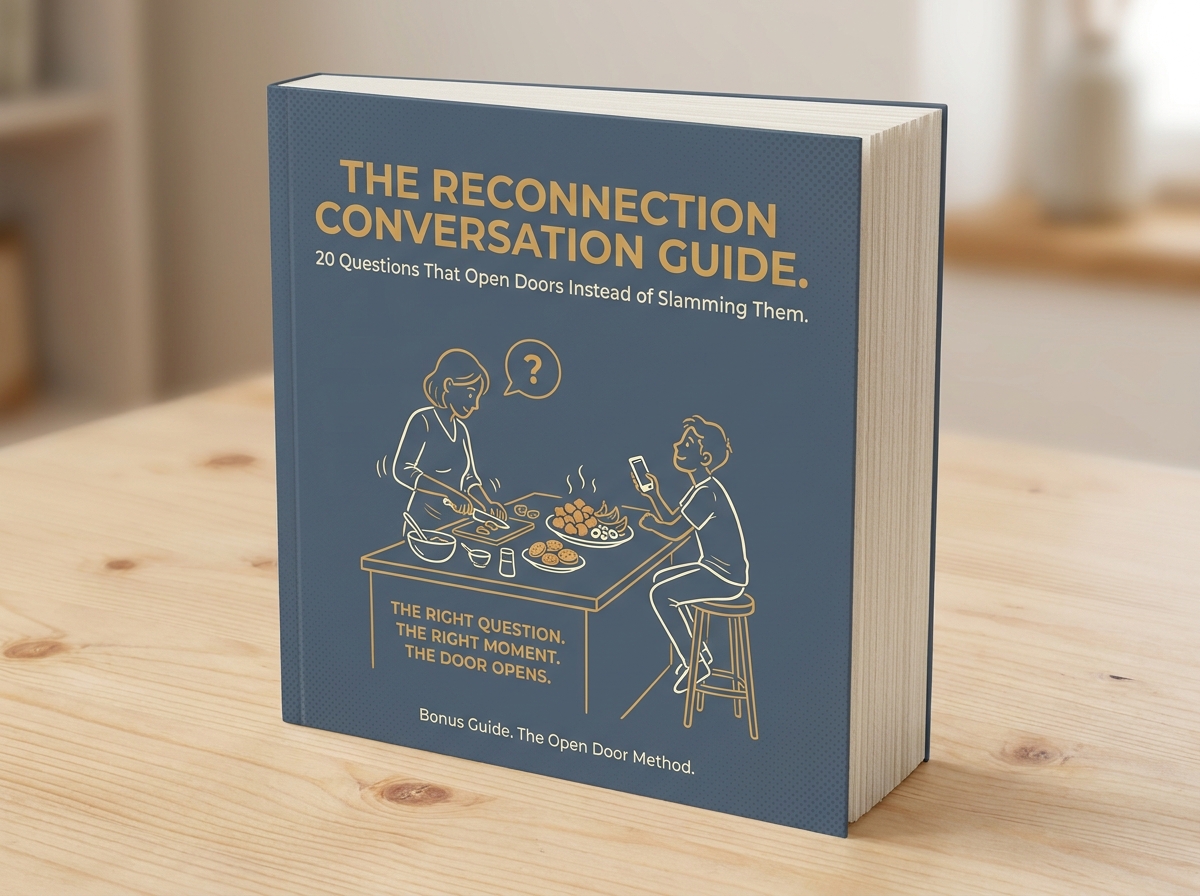
20 conversation starters that open doors instead of slamming them. The questions that replace "how was school" (which always gets "fine"). The timing guide: WHEN to talk matters more than WHAT to say. The car conversation technique. The bedtime check-in. The kitchen orbit method. Exact phrases for the first 21 days.
21-Day Conditional Guarantee
Follow the method for 21 days. If you don't notice a meaningful shift in how your teenager responds to you and how YOUR home feels, full refund.
The door either opens or you pay nothing.
Right Now, You Have a Choice
Keep Bracing Before You Knock
Another dinner where he eats in silence.
Another door slammed so hard the frame shakes.
Another "why do you even care" that echoes for hours.
Another punishment that makes him secretive, not obedient.
He's not getting younger. Every month the gap widens. Every fight adds a lock to the door. Without a change in approach, the door doesn't open. It deadbolts.
Learn to Knock Differently
Imagine 21 days from now:
You walk past his room. The door is ajar.
He comes to the kitchen. Sits down. Shows you a video.
"Mummy, look at this."
The fights become disagreements. The silence becomes peace.
₦9,750. 21 days. You change first. He follows. The door opens. Not because you forced it. Because he chose to.
P.S. #1: Think about tonight. When you get home, will you brace before knocking? ₦9,750 and 21 days stand between tonight's brace and the evening he leaves his door open because he WANTS you to walk past it.
P.S. #2: Grounding didn't work. Phone confiscation didn't work. Shouting didn't work. Being his friend didn't work. Laying down the law didn't work. Not because your child is the exception. Because every strategy treated his development as a problem. This method treats it as a process. Different approach. Different result.
P.S. #3: Mama Ifeoma raised 5 teenagers. All 5 slammed doors. All 5 came back. "The door always opens," she says. "But only if the parent learns to knock differently." ₦9,750 to learn how to knock. The door opens on its own.